Truthout is a vital news source and a living history of political struggle. If you think our work is valuable, support us with a donation of any size.
As news broke that the United States and Israel had launched war on Iran, two posts kept showing up over and over on my social media feeds. One was from the Israeli military’s official account, which stated an oft-repeated phrase: “Israel has the right to defend itself.”
The other was a video from the Iranian city of Minab, where the first reports of casualties were emerging. The joint U.S.-Israeli attack had hit a girls’ elementary school; the death toll kept ticking higher and higher. At the time of publication, Iranian authorities said 108 people, mostly schoolchildren, had been killed in the strike, with many more injured.
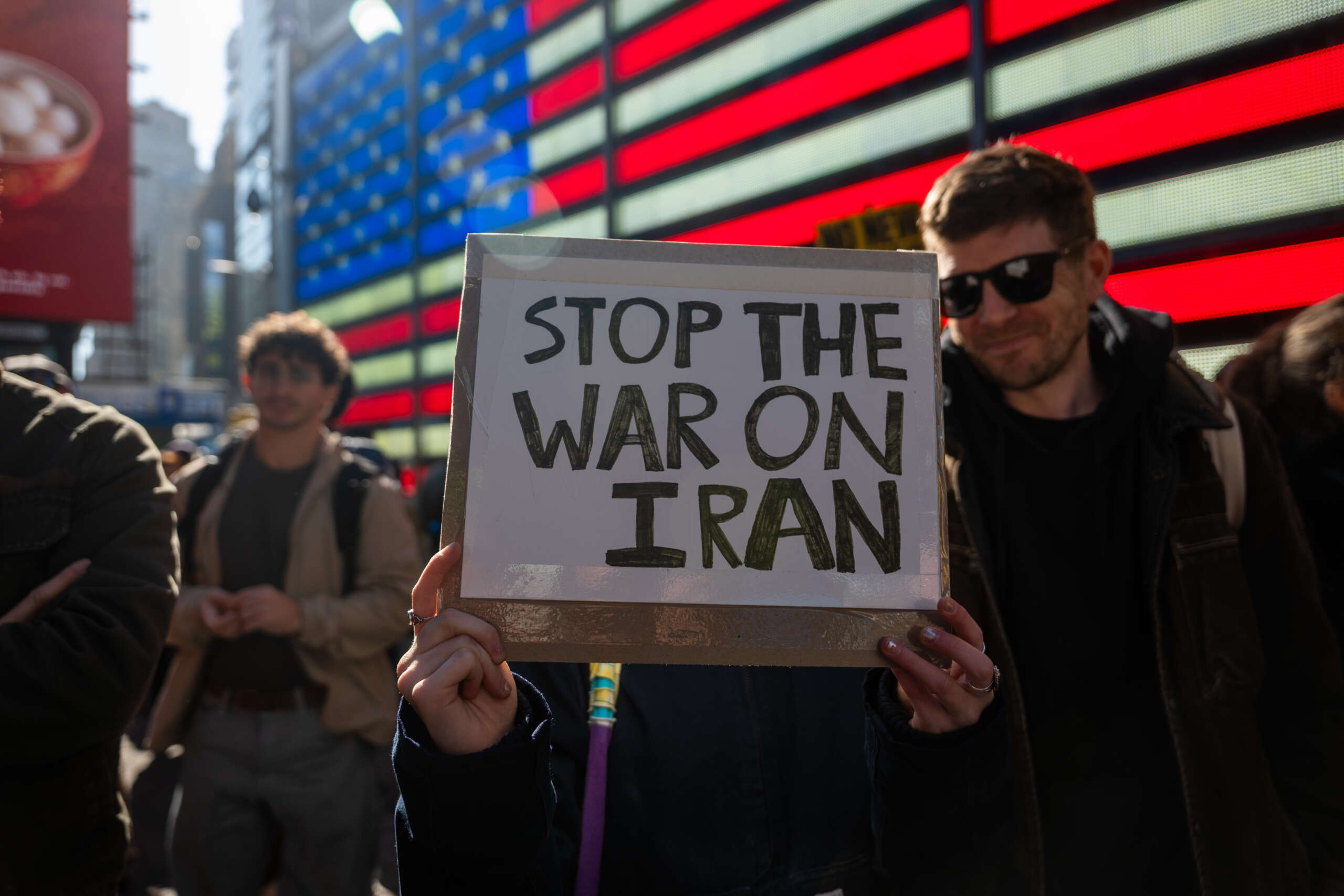
Plenty has been written, in Truthout and elsewhere, about the totally incoherent justifications for this war, the illegality of it, the potential for regional disaster, the joke it has made of the very idea of diplomacy. All of this was and continues to be true, and all of it is important to raise. But more than anything, we in the U.S. need to reckon with the fact that so much of our state wealth, capacity, and technology goes toward burying children in rubble.
Last year, when Israel and the U.S. launched the strikes that would be prelude to this attack, I wrote that the two countries were “shedding even the pretense and facade of the principles of a rules-based international order that has already worked in their favor.” In the wake of those strikes, once the immediate violence ceased, we largely heard crickets from U.S. lawmakers. This, despite the fact that those strikes, like these, were illegal under U.S. and international law. We cannot let this continued lack of accountability stand. If we do, what will happen next?
We in the U.S. need to reckon with the fact that so much of our state wealth, capacity, and technology goes toward burying children in rubble.
Over the years, U.S. and Israeli leaders have become increasingly vocal about their hopes for “greater Israel” — the boundless expansion of an apartheid state. Before the start of the current assault on Iran, former Israeli Prime Minister Naftali Bennett, a favorite in the country’s upcoming elections, accused Turkey of being the hub of a threatening axis “similar to the Iranian one.” This war is not about Iran’s nuclear program. It is not a war to free Iranians from a repressive regime. This is a war to preserve U.S. power and hegemony across the entire region.
It is also not accurate to say that Israel is dragging the U.S. into a war against its choosing. Reporting has shown that these two nuclear powers were in lockstep in their planning of this attack. In order to stop this violence, we need to really contend with how it started. The U.S. is hardly a victim here.
This state of affairs is intolerable. I am disgusted to know that my tax dollars are being spent to bomb my ancestral homeland. I was sickened to wake up to messages from family members telling me that the city where they live was under attack from the country where I live. I’m terrified now that Iran’s government has cut internet access yet again, leaving us disconnected from our loved ones. No fear, of course, can compare to the terror of being on the receiving end of missiles or guns, whether they are wielded by a foreign power or your own government; Iranians have been killed by both in horrifying numbers over the last year. But for those of us in the diaspora, the fact that it has now become routine to check in on family and friends living through untold violence does not make it any less traumatic.
Despite the abject horror of this moment, we cannot afford to slip into despair. There is still space for things to get much worse, but, more importantly, there is still so much left that we must protect. No one can predict what will happen over the coming days and weeks, but we know they are likely to be filled with more violence and uncertainty. We need to use every single tool at our disposal to chip away at the war-making systems inflicting this horror, which are so thoroughly embedded in the heart of the United States.
I am disgusted to know that my tax dollars are being spent to bomb my ancestral homeland.
We can start, of course, by demanding that Congress immediately pass a war powers resolution to put an end to this destructive assault. Beyond that we can lift up the call being made by groups like Defending Rights & Dissent for Congress to impeach not only Donald Trump but every single member of his cabinet who had a hand in making this unjust and illegal war possible.
But we shouldn’t stop there. Our elected officials need to publicly explain why they hemmed and hawed over a war powers resolution before these attacks occurred, despite an obvious military buildup.
We must demand that every member of Congress who has voted to increase our military budget to nearly a trillion dollars account for their choices. We must push those members who have personal investments in the military machine — to the tune of tens of millions of dollars — even further. They need to explain their conflicts of interest, and why they continue to profit off this death and destruction. Lawmakers who take money from groups like AIPAC that are relishing in this war especially need to answer for their votes.
It’s also imperative to not view this war in a silo, but instead see it as part of the same violent, hegemonic project that has been conducting genocide and spreading violence across Palestine, Lebanon, Yemen, Syria, and beyond. We must hold elected officials accountable for failing to uphold U.S. and international law by continuing to support the transfer of weapons to Israel as it commits genocide against Palestinians. We must make it politically toxic for those lawmakers not to support legislation like the Block the Bombs Act, which aims to stop such transfers.
We also can’t expect elected officials to do more just because we ask them to. We need to build power. We must support grassroots movements like the Boycott, Divestment, and Sanctions movement that seek to make war, apartheid, and genocide too costly to wage. We must back campaigns like Taxpayers Against Genocide that are searching for legal avenues to keep federal funds from being used to violate human rights.
Would we be here if there were any real repercussions for the 2003 invasion of Iraq, or the continuing genocide in Palestine?
We can wage campaigns against death-dealing corporations and make sure that war-profiteering is exposed and subjected to public outrage. The No Tech for Apartheid movement has long been organizing to push Silicon Valley to stop supplying the Israeli military with computing power, and has already found some success. The Israeli military’s use of artificial intelligence (AI) in Gaza has received a great deal of reporting; now that OpenAI has announced a deal to allow the Pentagon to use its models in their classified networks, the fight against AI has taken on renewed urgency. Campaigns across the country against data centers are now also a crucial nexus of resistance against militarism.
So too are campaigns for immigrant rights and against deportations. In the wake of the U.S. strikes against Iran last June, the Trump administration rounded up Iranian immigrants for deportation. Those deportations continued into this year, even as the Iranian government staged a brutal crackdown on protesters. As we prepare for war to rage across the region, we can demand the U.S. and Europe open their borders to people fleeing violence and despair. We can continue to show the links between the occupation of cities by federal immigration agents here at home and imperial wars waged abroad. The enemies of democracy here are also the enemies of democracy abroad.
Some of these demands may seem futile under this murderous president, backed by an obedient Congress, and with a Supreme Court that has offered comparatively little restraint. But this unaccountable bureaucracy makes it all the more essential that we build grassroots power to issue these demands and force those in power to heed them.
Polling shows that this war is unpopular. Trump may be an authoritarian, but he is not entirely invulnerable, nor are the elected officials who have given him pass after pass. We cannot let him believe for a second longer that he can get away with something this wildly illegal or recklessly dangerous without accountability. And we cannot let the leaders who follow him believe that they, too, can unleash such violence without consequences. After all, would we be here if there were any real repercussions for the 2003 invasion of Iraq, or the continuing genocide in Palestine? We need true accountability for these crimes. And the only way to get it is to wage a struggle against militarism every day — not only in moments of crisis, but whenever and wherever it rears its ugly head.
A terrifying moment. We appeal for your support.
In the last weeks, we have witnessed an authoritarian assault on communities in Minnesota and across the nation.
The need for truthful, grassroots reporting is urgent at this cataclysmic historical moment. Yet, Trump-aligned billionaires and other allies have taken over many legacy media outlets — the culmination of a decades-long campaign to place control of the narrative into the hands of the political right.
We refuse to let Trump’s blatant propaganda machine go unchecked. Untethered to corporate ownership or advertisers, Truthout remains fearless in our reporting and our determination to use journalism as a tool for justice.
But we need your help just to fund our basic expenses. Over 80 percent of Truthout’s funding comes from small individual donations from our community of readers, and over a third of our total budget is supported by recurring monthly donors.
Truthout’s fundraiser ended last night, and we fell just short of our goal. But your support still matters immensely. Whether you can make a small monthly donation or a larger one-time gift, Truthout only works with your help.