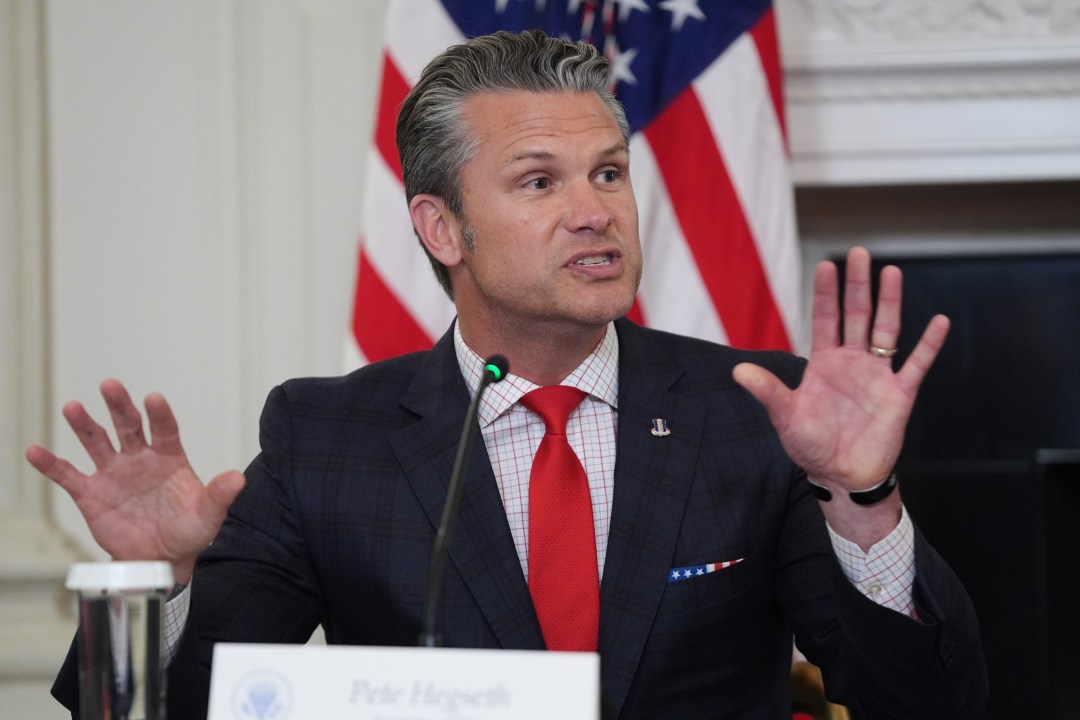
The Trump administration is one of the most anti-labor administrations in modern U.S. history — it has attempted to decertify the union representation of more than 1 million federal employees. Trump has also fired key members of the National Labor Relations Board, thus rendering it largely non-functional. Moreover his administration has come out against rules requiring disabled workers all be paid at least the federal minimum wage of $7.25 per hour, and it has blog/trumps-blatant-attack-on-workers-you-may-not-have-heard-about-cutting-the-wages-of-nearly-half-a-million-workers/”>blocked a Biden-era rule increasing the minimum wage for federal contractors.
Despite faux-populist credentials and a claim to be addressing the forgotten multitudes, Trump 2.0 is simply following modern Republican Party orthodoxy. The federal minimum wage has been stuck at $7.25 per hour since 2009, with the GOP stymying repeated efforts in Congress to increase the wage to at least keep up with the cost of living. As a result of this intransigence, the federal minimum wage today has the lowest real value that it has had since at least 1956. In 2022, researchers with the Economic Policy Institute estimated that in the 13 years since the last minimum wage increase, prices had increased by more than 27 percent. Since 2022, the U.S. has experienced a surge of inflation that has further eroded the value of that minimum wage — and yet the GOP majority in Congress, now backed by Donald Trump and his hard-right cabinet, remains adamantly opposed to legislation that would increase the federal minimum wage.
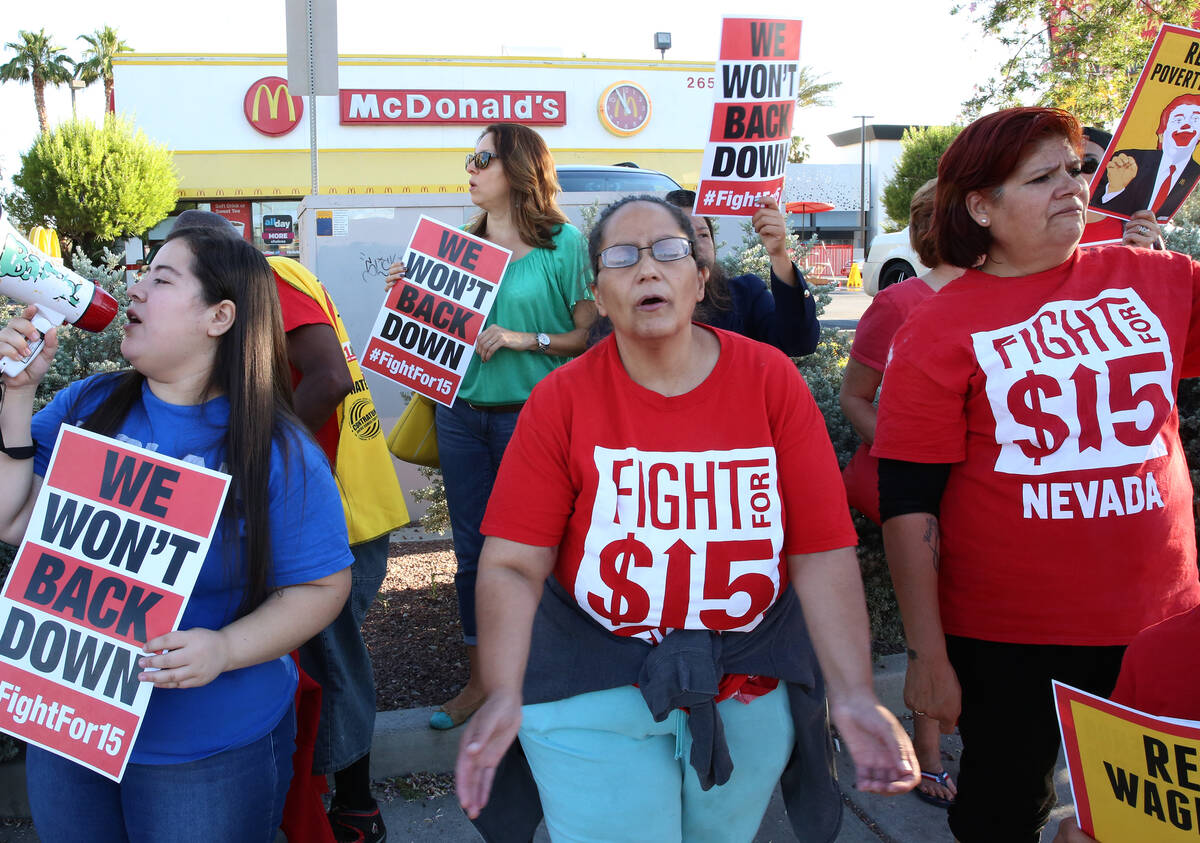
Trump recently addressed a conference of McDonald’s corporate executives, managers, and franchise owners, telling them they would have to fight minimum wage hikes, and, using his customary slew of juvenile insults, lambasted California Gov. Gavin Newsom for raising the state’s minimum wage.
However, as the Trump administration continues to undermine labor and the minimum wage, city and state governments are stepping in themselves to enact wage increases for their residents.
More than two dozen more cities, counties, and states will raise their minimum wage later in 2026. In most of these, the minimum wage will rise to at least $15 per hour.
According to a recent report by the National Employment Law Project (NELP), 68 cities, counties, and states will see their minimum wages go up at the start of the new year. More than two dozen more will raise their minimum wage later in 2026. In some of these locales, the higher minimum wage will apply to all workers; in others, to only some sectors of the economy. In most of these, according to the NELP data, the minimum wage will rise to at least $15 per hour — the goal established by the Fight $15 campaign more than a decade ago, and in many to $17. In a number of these locales, large employers will have to pay a higher minimum wage than will small business owners.
New Jersey is creating a higher minimum wage of $18.92 per hour for long-term care workers. In Los Angeles, as the city prepares for both the World Cup and the 2028 summer Olympics, a coalition of unions, led by UNITE Here Local 11, have successfully pushed for a move toward a $30 per hour minimum wage by 2028 for many tourism industry jobs. When the hotel industry tried to put a referendum on the ballot to overturn this, the coalition successfully beat it back. In San Diego, an increasingly progressive city council has voted for wage increases, meaning that hospitality workers are on course for a $25 per hour minimum wage by 2030.
California as a whole now has a sector-wide collective bargaining system in place for the fast-food industry, and a minimum wage in that sector of at least $20 per hour. It also has begun the process of applying the federal minimum wage to incarcerated firefighters, who often find themselves on the front lines of massive wildfires, but historically have been paid pennies on the dollar.
The widespread popularity of minimum wage increases can be seen in the political diversity of the locales raising the wage for low-end workers this coming year. Missouri voters supported Trump by an 18-point margin in 2024, but in that same election they passed a $15 per hour minimum wage, and the state supreme court upheld the constitutionality of that initiative — though the GOP-led legislature then blunted its impact somewhat by passing a law to no longer index state minimum wage increases to inflation and rolling back paid sick leave. Alaska, which already had an $11.91 minimum wage, increased the minimum to $13 starting in mid-2025. Nebraska’s electorate also voted in 2022 to increase the state minimum to $15 starting in January 2026. And in 2020, Florida voters approved a graduated series of minimum wage increases, meaning the state will reach $15 per hour in September of next year.
In fact, look at a map of the United States, and one sees two Americas: in the first, the public has backed a higher minimum wage and legislators have enacted changes that in many cases more than double the federal minimum; in the second — concentrated largely in the deep south, the rural Midwest, and the mountain west — workers at the bottom of the economy still earn $7.25 per hour, and efforts to better their lot have consistently fallen flat in the face of unrelenting political hostility from the governing party.
In 26 (mainly Republican-controlled) states, legislators have gone so far as to pass legislation blocking their more liberal cities from enacting their own higher minimum wage ordinances.
In 26 (mainly Republican-controlled) states, legislators have gone so far as to pass legislation blocking their more liberal cities from enacting their own higher minimum wage ordinances. In consequence, despite cities such as Austin, San Antonio, and Dallas attempting to make life better for workers at the bottom of the economy over the past decades, they remain largely bound by the opposition to minimum wage increases in hard-right legislatures such as that of Texas, with exceptions only for local public employees, who do earn higher minimum wages.
As the 2026 midterms approach, “affordability” has become something of a political buzzword — one with the potential to upend traditional political calculations, as the recent election of Zohran Mamdani to the mayorship of New York City demonstrated. Polling from 2023 found that two-thirds of voters favored a federal $15 per hour minimum wage. More recent polling, reflecting the years of high inflation unleashed first by the COVID crisis and then by Trump’s tariffs, shows majority support to move toward a $25 per hour “living wage,” with voters in high-cost-of-living cities now favoring $30 per hour as a baseline.
This is a profound change in the voting public’s economic priorities and suggests that those candidates who successfully craft policies to address the affordability crisis will reap dividends at the ballot box. Paradoxically, the worse Trump’s posture on affordability and on the minimum wage gets, the more advocates of a higher minimum wage at the local level see the wind in their sails.
Trump may deride the affordability crisis as just a “con job,” but voters know that without a commitment to increasing the purchasing power of those at the bottom of the economy, millions will be left holding the bag for economic policies that continue to massively increase inequality and insecurity in the United States.
Our most important fundraising appeal of the year
December is the most critical time of year for Truthout, because our nonprofit news is funded almost entirely by individual donations from readers like you. So before you navigate away, we ask that you take just a second to support Truthout with a tax-deductible donation.
This year is a little different. We are up against a far-reaching, wide-scale attack on press freedom coming from the Trump administration. 2025 was a year of frightening censorship, news industry corporate consolidation, and worsening financial conditions for progressive nonprofits across the board.
We can only resist Trump’s agenda by cultivating a strong base of support. The right-wing mediasphere is funded comfortably by billionaire owners and venture capitalist philanthropists. At Truthout, we have you.
We’ve set an ambitious target for our year-end campaign — a goal of $250,000 to keep up our fight against authoritarianism in 2026. Please take a meaningful action in this fight: make a one-time or monthly donation to Truthout before December 31. If you have the means, please dig deep.

Source link